Storms
How storms affect trains and the railway
Storms can bring heavy rain, high winds and flooding, which may damage railway equipment or block the line. Landslips can also happen when prolonged rainfall saturates the ground.
We monitor weather conditions and prepare teams and equipment so we can respond quickly. During severe weather, trains may need to run more slowly, and some services may be changed or cancelled to keep passengers and railway staff safe.
Storms and the railway: key facts
- Heavy rain can flood tracks and damage signalling and power supplies.
- High winds can blow trees and other objects onto the railway.
- Strong winds may make some repair work unsafe until conditions improve.
- Saturated ground can cause landslips near the railway.
- Trains may run more slowly during severe weather.
- We work with the wider rail industry to manage disruption and provide journey information.
Flooding
Water blocking the lines – debris, silt and mud making its way onto the track – are only part of it. The lasting damage flood water can cause to infrastructure can lead to ongoing repair work that takes days, weeks or even months. Washed away ballast – the stones that support the track – can make the line unsafe until it’s re-laid.
Flooding can also affect:
- live conductor rails that power trains
- signalling, which tells trains if it’s safe to proceed
- and points, which enable trains to change lines.
Sometimes, flooding doesn’t stop trains running. But if water levels rise above the rails, trains must slow down to prevent damage to the train.
High winds
Strong winds can blow trees into infrastructure, damaging the overhead lines that power electric trains. The winds can mean it’s unsafe to carry out repairs at height – or with certain machinery until the winds have dropped. This could mean we won’t complete repairs in time for a normal morning service.
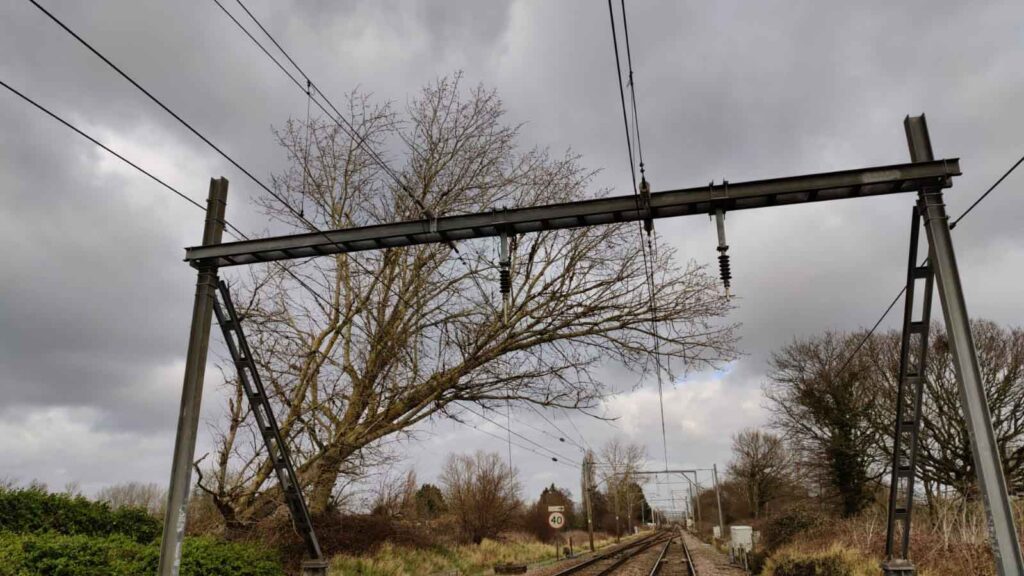
And objects like trampolines and garden furniture can blow onto the tracks, blocking the line. If you live by the railway, please help us by securing any loose garden items that might blow on to the tracks.
Landslips
Landslips are another risk – even once the water seems to have receded. They happen when the moisture in the ground forces the grains of soil apart – so the embankment weakens and slides.
Why trains may slow down or stop during storms
We may introduce speed restrictions so train drivers have more time to react to hazards. In more severe conditions, services may need to stop or be cancelled while we inspect the railway, clear debris and complete repairs.
These decisions help protect passengers and railway staff. We work with train operators to keep services running where it is safe to do so.
How we respond to storms
We constantly monitor the weather so we can act quickly with repairs, flood defence systems and teams to clear lines. Your safety always comes first so sometimes we’ll need to slow down or cancel services. But we’ll work with the wider rail industry to keep you updated and get you where you need to be, safely.
Read more:
Check your journey
We can’t change the weather, but it can change your plans. Visit National Rail or your train company’s website for the latest travel information.