Leaves on the line
Leaves on the line can make railway tracks slippery, much like black ice on the roads. This makes it harder for trains to accelerate and brake.
During autumn, trains may need to travel more slowly and take longer to stop. We use specialist trains, track treatments and weather forecasts to reduce disruption and help you reach your destination safely.

Why can leaves on the line cause train delays?
There are millions of trees on and next to the railway. Every autumn, thousands of tonnes of leaves fall onto the tracks.
Rain makes leaves more likely to stick to the rails. When trains pass over them, the heat and weight of the wheels compress the leaves into a thin, slippery layer.
This layer reduces the grip between train wheels and the rails, much like black ice reduces the grip between car tyres and the road.
Why are wet leaves a problem?
Wet leaves stick to the railway more easily. If lots of leaves fall during windy or rainy weather, they can quickly build up on the rails.
Passing trains compress the leaves into a smooth layer that can be difficult to remove. This can affect several trains using the same section of railway.
Why do trains sometimes have to slow down?
When the rails are slippery, train drivers may need to:
- leave stations more slowly
- accelerate more carefully
- reduce their speed
- begin braking earlier
These measures help trains stop safely at stations and signals. However, they can increase journey times and lead to delays.
Leaves can also interfere with the electrical systems that help us identify where trains are on the railway.
If the system cannot confirm a train’s exact location, other trains may need to wait at red signals until it is safe to continue. This keeps a safe distance between trains.
How do we reduce delays caused by leaves?
We prepare for autumn throughout the year. During the leaf-fall season, we use specialist equipment, weather forecasts and local teams to keep the rails clear.
Leaf-busting trains
Our specialist leaf-busting trains travel around the railway cleaning the top of the rails.
They use high-pressure water jets to remove compressed leaf material. They can also apply a special gel containing sand and steel grains. This helps train wheels grip the rails.
Specialist track teams
Our local teams treat affected sections of railway by hand.
They apply a sand-based treatment to the rails to help trains run safely and reliably. Teams are based at key locations so they can respond where they are most needed.
Forecasting slippery rails
Specialist forecasters help us identify locations that are likely to experience heavy leaf-fall or slippery rails.
During autumn, we receive forecasts twice a day. We use this information to send our trains, equipment and teams to the areas where they can have the greatest effect.
Managing trees and plants
We manage trees and other plants beside the railway throughout the year. This helps us reduce safety risks and disruption while supporting biodiversity along the railway.
Our work can include inspecting trees, removing unsafe vegetation and managing plants that could affect the railway.
How we prepare for autumn
67 leaf-busting trains
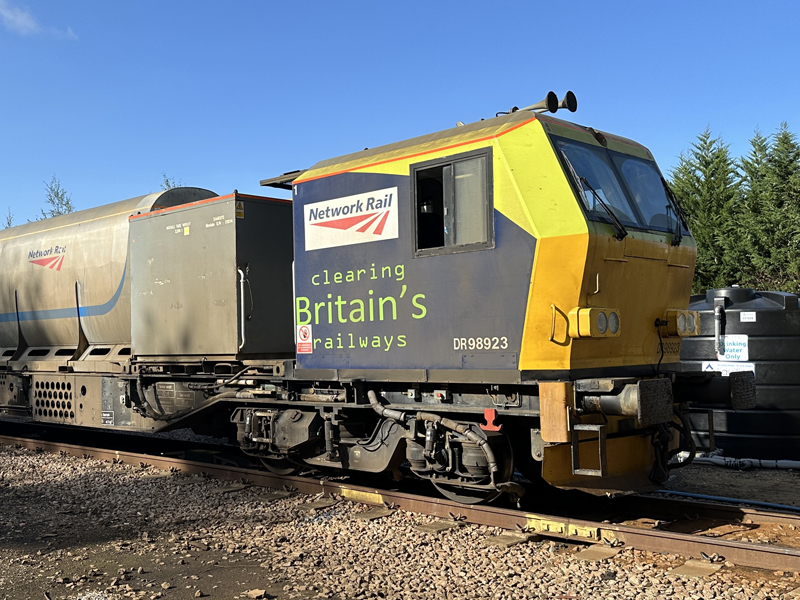
Our specialist trains clean and treat the rails to remove slippery leaf material.
Two-person teams
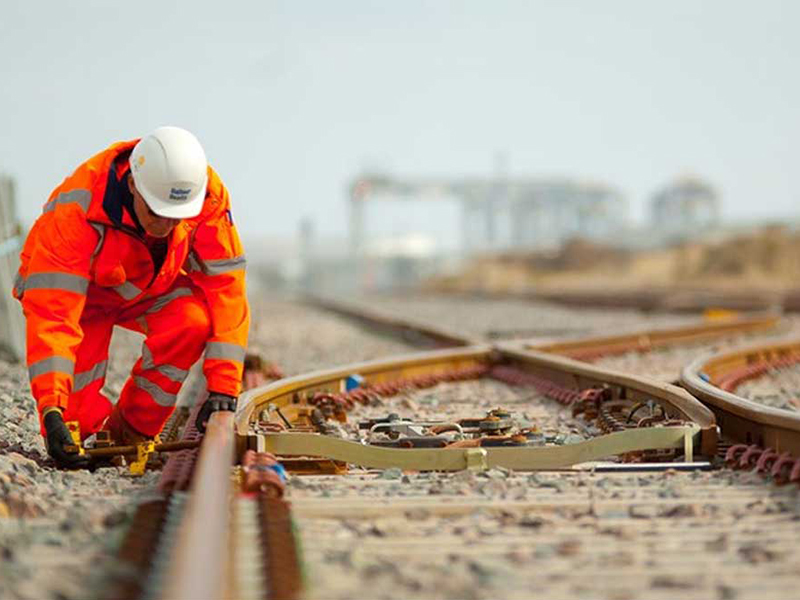
Our specialist teams treat the rails by hand at key locations across Britain.
Twice-daily forecasts
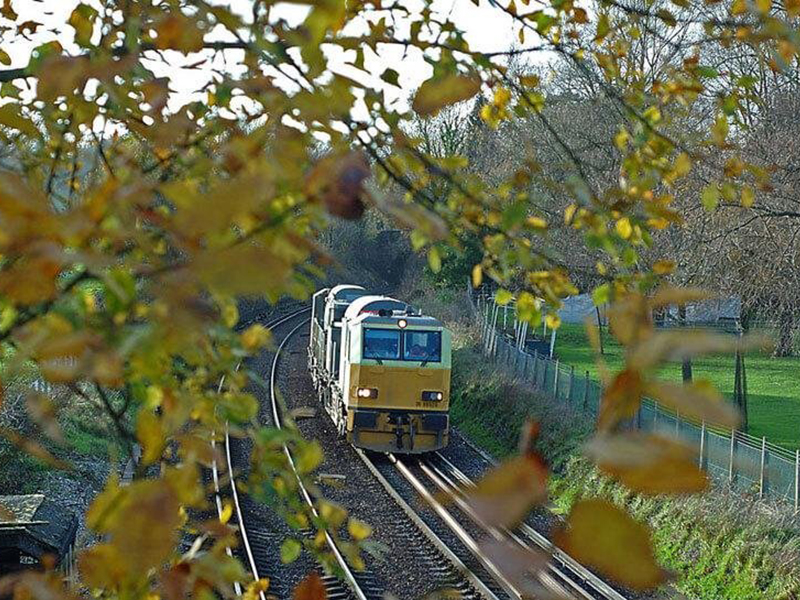
Specialist forecasts help us target the locations most likely to be affected.
Why does my train have an autumn timetable?
In areas where heavy leaf-fall regularly affects the railway, some train operators introduce temporary autumn timetables.
These timetables may include longer journey times. The additional time allows drivers to accelerate and brake more carefully when the rails are slippery.
Planning for this in advance helps the rail industry provide a safe and reliable service in challenging autumn conditions.
Check if your journey is affected
Leaves do not affect every route in the same way. Conditions depend on the weather, the number of trees near the railway and how quickly leaves are falling.
Check the latest service information before you travel. Your train operator can also help with questions about individual services, tickets and alternative travel arrangements.
Frequently asked questions
More about train delays
Find out more about why disruption happens and what we do to keep trains moving.