Flooding
How flooding affects trains and the railway
Heavy rain can overwhelm drainage systems and flood railway tracks. Floodwater can damage track, signalling equipment and power supplies, leading to slower trains to keep you safe, cancellations and disruption while we inspect and repair the railway.
We monitor weather forecasts, maintain drainage systems and use pumps and flood defences to reduce the risk of flooding and keep trains moving safely.
Flooding on the railway: key facts
- Heavy rain can overwhelm railway drainage systems.
- Floodwater may wash away the stones that support the track.
- Water can damage signalling equipment and power supplies.
- Trains may need to slow down if water rises above the rails.
- We monitor flood warnings and send teams and equipment to areas at risk.
- Disruption can continue after the floodwater has gone because we must inspect and repair the railway before trains can run safely.
Why can the railway flood?
There are several reasons why the railway can flood:
- Geographical Features: Many sections of the railway were built in cuttings and tunnels that are lower than the surrounding area. Other lines are on flat, low-lying land with limited drainage, which can be overwhelmed by heavy rain. For these reasons, many of our lines can flood, and this can cause serious problems for the railway. That’s why we’re always looking for ways to prevent floods happening in future.
- Urban development: Building on land near the railway can increase flooding because rain that previously soaked into the ground can run off the new hard surfaces and onto the tracks. To help prevent this, we review planning applications for developments near railway lines to make sure the drainage systems proposed are adequate.
How flooding affects the railway
When the railway floods, our engineers and contractors carry out repairs day and night so trains can safely run again as soon as possible, and there are lots of different things they have to check and repair.
When flood water rises above the rails, trains have to reduce their speed because debris may have moved onto the rails, or the ground underneath the track may have washed away. Flooding can cause a short circuit and cut the power if the track has a live conductor rail.
It’s not just during a flood that journeys can be disrupted but afterwards as well.
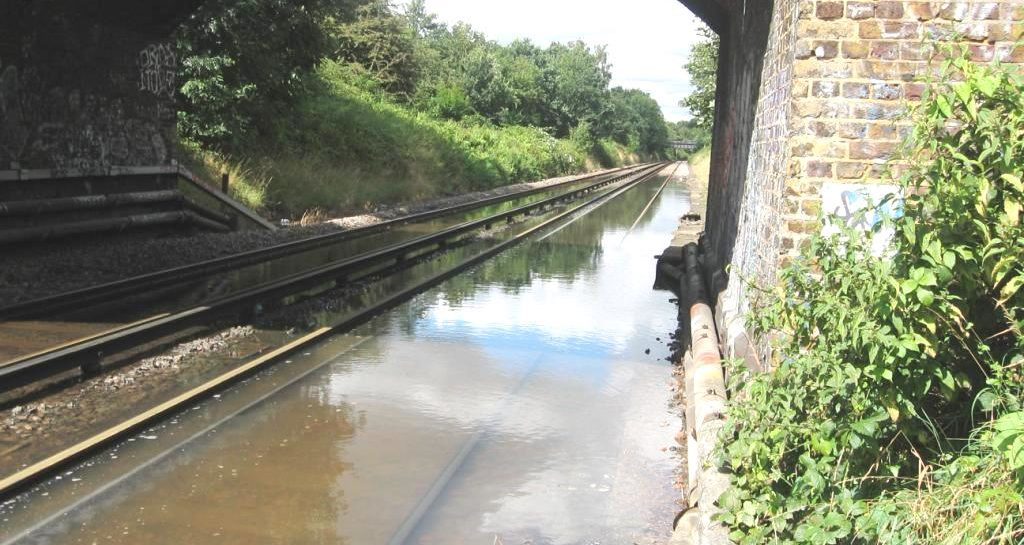
Trackside points and signalling equipment that rely on intricate wiring and power supplies can easily fail during flooding. They need to be replaced before trains can run on the track again.
When flood water drains away, it can wash away the ‘ballast’ – the bed of stones that supports the sleepers. This destabilises the track. To make the line safe again, this ballast must be relaid.
What happens when we get flooding on the railway?
- Water runs off hard ground onto the tracks, while ballast can wash away, de-stabilising the track.
- Heavy rain can also short-circuit power supplies for trains and cause signalling equipment to fail.
What we’re doing to reduce the effects of flooding and prevent delays
- Weather monitoring: We continually monitor the weather and prepare flood maintenance teams for action. As soon as we receive a flood warning from the Environment Agency and Flood Forecasting Centre, we send people and equipment to at-risk areas so we’re in position to act quickly.
- Flood defence systems: We deploy flood defence systems, including barriers with a membrane that seals to prevent water getting through, and inflatable barriers filled with water.
- Drainage maintenance: We keep drainage clear of blockages from vegetation, silt and debris and install new tracks and lineside equipment at higher than ground levels to keep them clear of water.
- Pumping stations: Thanks to our ongoing project to build pumping stations in flood-prone locations, we have the resources in place to enable us to quickly pump flood water away when needed.
- Engineering works: As lines are renewed in flood prone areas, we install the tracks and signalling equipment at a higher level so it’s less likely they’ll be flooded.